Bacterial Signaling Molecules (Alarmones)
"Alarmones" are intracellular bacterial signaling molecules that regulate transcriptional regulation of genes involved in responding to harsh environmental stressors.
This analysis covers 4 alarmones and 3 of their precursors.
Minimal sample amounts:
- Bacterial cells: 1e6 cell pellets or 4 mL of bacterial culture
- Cell pellets are extracted with 1 mL of 2 M formic acid on ice for 30 min. Following incubation, cells are pelleted and the supernatant is passed through a 0.2 μm filter. The filtrate should then be stored at -80°C until ready to submit to MSF.
- To measure alarmones in the media of bacterial cell cultures, pellet cells from 4 mL of bacterial culture and transfer the media supernatant to a new tube. Pass the supernatant through a 0.2 μm filter and store filtrate at -80°C until ready to submit to MSF. At least 1 mL of the filtrate is required for analysis.
- Biofilms: Contact us for more guidance on extracting alarmones from biofilms.
- Other sample sources contact us for more guidance
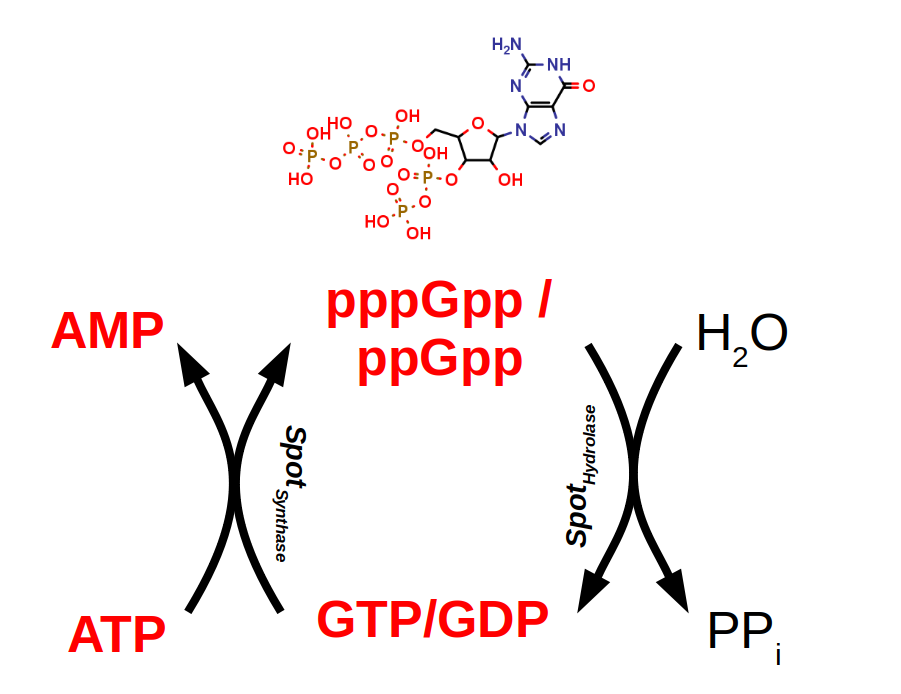
Below is a list of the alarmones and precursors covered in this panel. Don't see your favorite signaling molecule of interest? Let us know and we'll add it to the list when analyzing your samples.